MAHA/Innovations/RadarVector Pro
Vehicle inspection technology
Radar sensor function test
Radar sensor measurement without laboratory equipment: RadarVector Pro quickly shows whether a vehicle’s radar sensor is active and returning a signal — no PC, no software, no network connection.
Concept phaseADAS such as adaptive cruise control, emergency brake assist and lane keeping assist depend on working radar sensors. Until now, determining in the workshop whether a sensor is still active and functioning more or less correctly has been virtually impossible. The consequence: vehicles with ADAS fault codes are forwarded to the manufacturer, and calibration is performed without first testing whether the sensor is even transmitting.
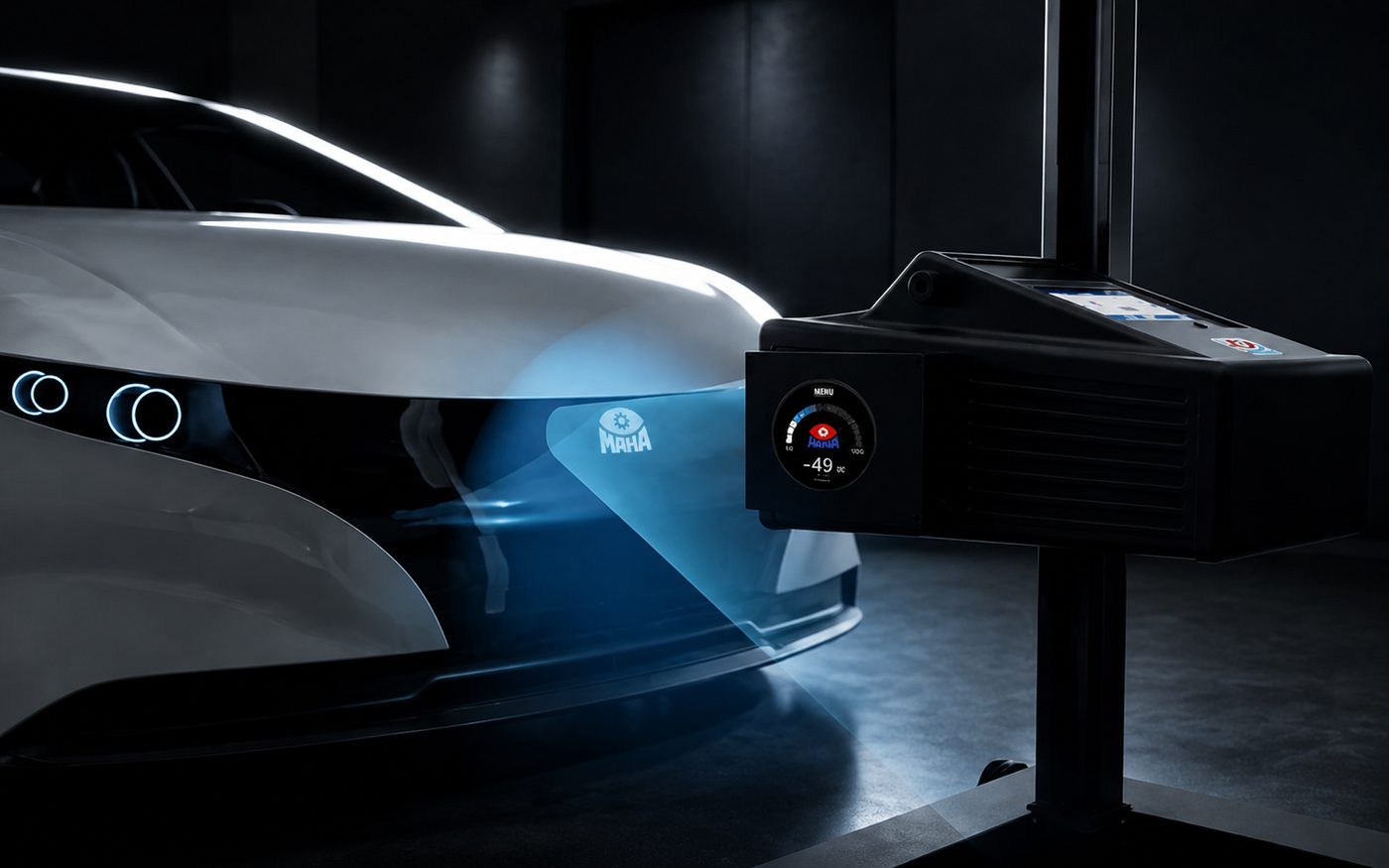
The built-in 77 GHz antenna receives the sensor signal in real time. The display shows the signal strength as a bar graph and the status — active, weak, inactive — immediately after positioning.
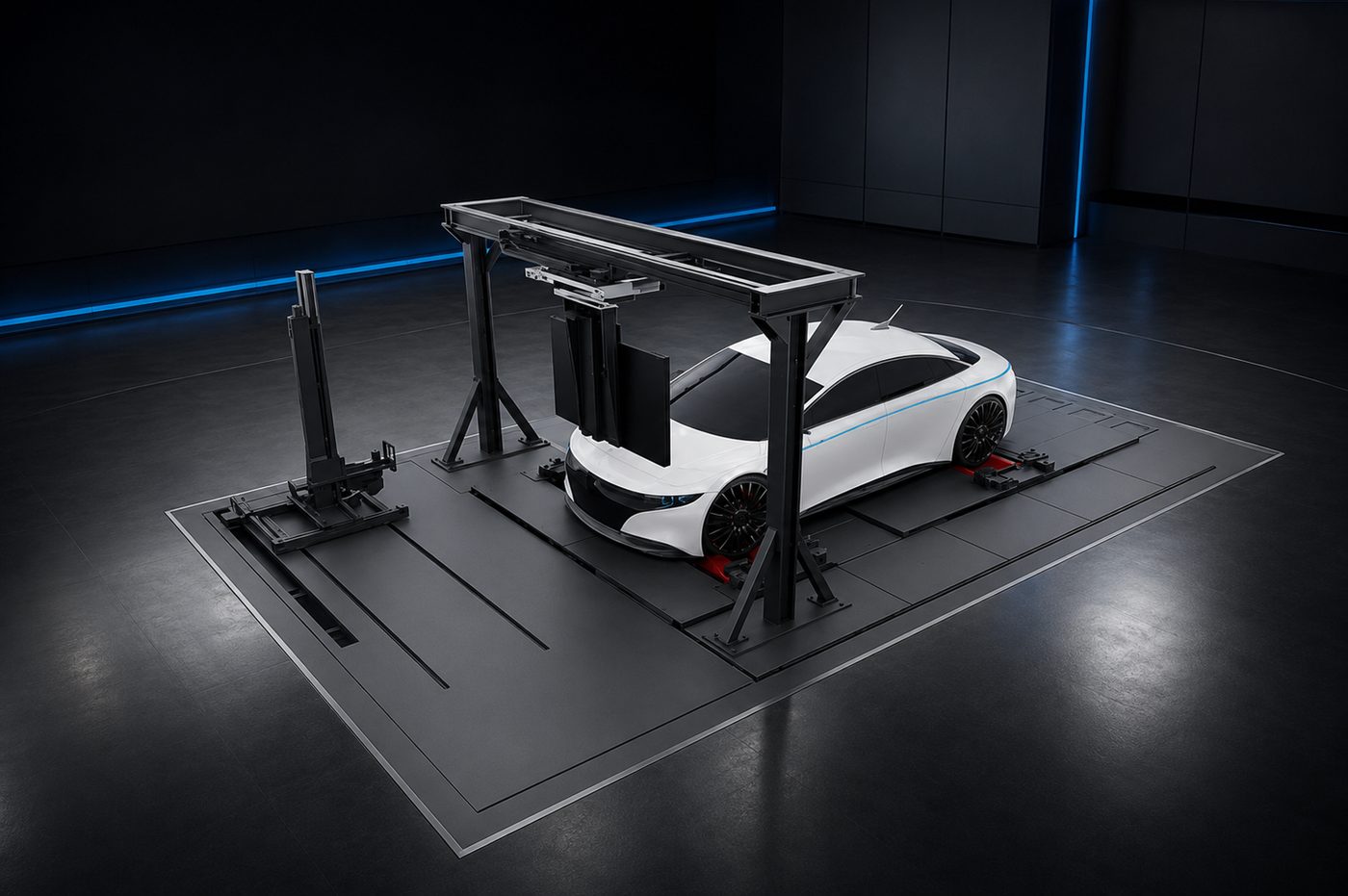
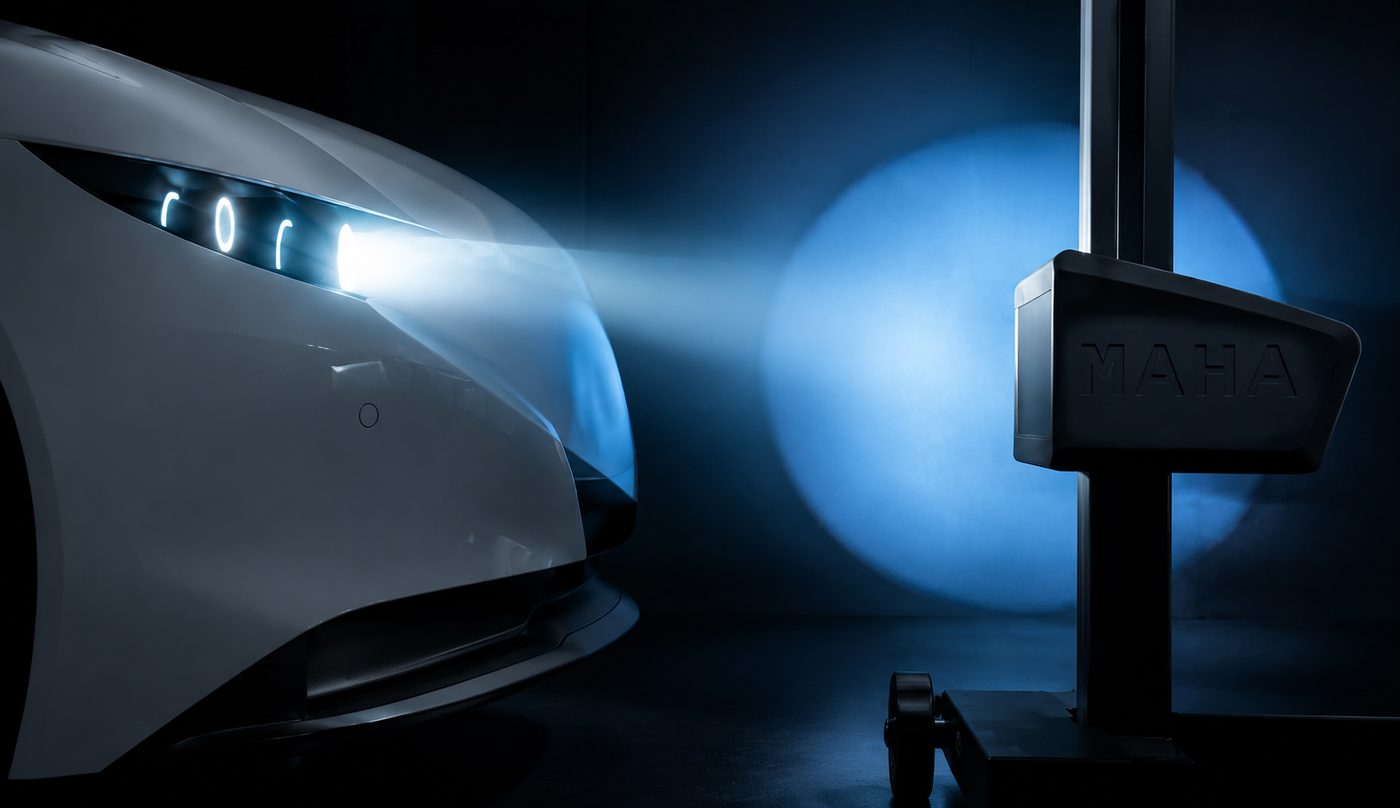
No permanent fixed installation: the hand-held unit moves to wherever testing is taking place. The only connection is the power supply. Optionally, it can be combined with an existing headlight tester — which also allows the sensor’s geometric alignment to be tested — or operated on a stand.
RadarVector Pro tests whether the sensor is working; by design, the device does not perform dynamic object simulation. The function test of the complete system, i.e. whether the vehicle reacts correctly, remains the task of MAST.
Independent workshops and body shops: measure the radar sensor status before calibration, rather than making assumptions.
Inspection bodies: sensor testing as an additional PTI test step.
Fleet operators: random ADAS sensor checks without the need for a workshop visit.
The innovations shown are at different stages of development. They are not available at short notice and will not necessarily be implemented in the version shown at the trade fair.
Product management and sales can provide information on availability, configuration and requirements for use.