MAHA/Innovations/MAST 2.0
Vehicle inspection technology
Function test stand for driver assistance systems
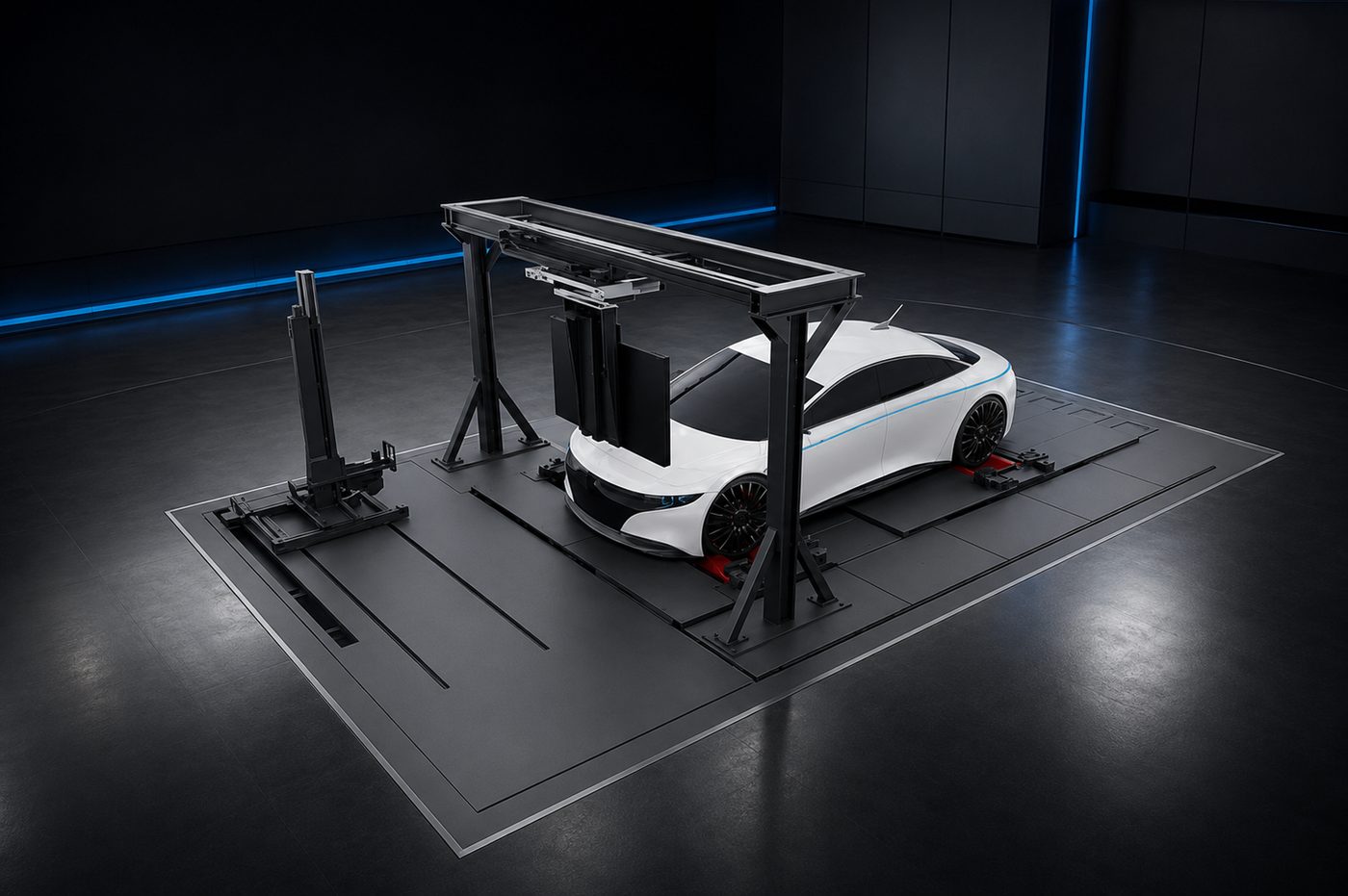
MAST 2.0 brings the test track onto the test stand: ADAS functions are tested fully, transparently and reproducibly — without a test track and without vehicle fixation.
In development · Pilot customer phase underwayRight now, ADAS functions like autonomous emergency braking, lane assist and adaptive cruise control can only be calibrated based on their individual camera and radar sensors. But calibrating the sensors isn’t the same as testing the entire system: genuine function testing is still missing.
Test tracks with physical targets, or highly complex end-of-line test stands, simply don’t add up for everyday PTI work or in a typical workshop.
At EU level, ADAS function testing is being discussed; the draft directive is taking shape.
The flywheel mass, steering rollers and sensor stimulation work together to recreate realistic driving conditions. A continuously variable flywheel mass simulates the vehicle weight. Over-the-air simulation stimulates radar and camera signals in real time. The patented steering compensation keeps the vehicle centred by actively controlling the front roller set — with no need for tension straps or clamps.
Autonomous emergency braking, lane assist and adaptive cruise control: fully tested in under 180 seconds — measurable, reproducible and suitable for slotting straight into the PTI process. The entire function chain is tested, in line with current European type approval directives.
Testability: ADAS are tested fully, transparently and reproducibly.
Safety: Both the vehicle and the test engineer stay protected — the hazards of real test tracks are eliminated.
Costs: The fast ADAS function test cuts investment costs and reduces risk at the same time.
Variable wheelbase, a design built for different weight classes and a belt drive. Cars, people movers and vans are tested and calibrated on the same test stand.
The innovations shown are at different stages of development. They are not available at short notice and will not necessarily be implemented in the version shown at the trade fair.
Product management and sales can provide information on availability, configuration and requirements for use.